Showing posts with label Entertainers. Show all posts

Even Eddie Murphy needs the nerves


Eddie Murphy and Jerry Seinfeld in a car
I loved this conversation between Eddie Murphy and Jerry Seinfeld on "Comedians in Cars Getting Coffee."

Those of us who have the most experience speaking and entertaining on stage know this to be true: If you're not a little bit nervous, you just don't do as well.

It doesn't mean you have to be shaking in your boots to give a good performance (because that's not good for anyone), and it doesn't mean that you can't experience incredible energy and a sense of flow and connection during the performance.

What it means is that, in order to do a good job, we have to care. We have to be committed to success, both in delivering our best and delivering what the audience needs, wants, and cares about.

Top speakers, athletes, and entertainers will always be nervous before an event because they're committed to doing their best and they don't rest on their laurels of previous successes.

So when a client comes to me and they say they don't want to be nervous when speaking, I have to tell them the truth: Eradicating all nervousness serves no purpose. 

What I CAN help with is managing nervousness, channeling the adrenaline, and working on your mindset around the adrenaline rush so you use it to serve your needs and your audience's needs.

Check out the conversation below!

Eddie Murphy: The times I've gotten on stage and felt totally loose with no energy of being uncomfortable at all, I would do shitty. I wouldn't have as strong a set.

Jerry Seinfeld: You wouldn't have. 

Eddie: No. 

Jerry: Right. 

Eddie: You gotta have a little bit of "What if this shit doesn't... what if they don't get all of this shit?" I always do best when I have a little bit of that.


____________________________________________________
On The Everything Page you'll find everything you need to build visibility, credibility and influence through engaging presentations that move your participants into action: freebies, low-cost products and courses, and 1:1 coaching!

Some storytellers are just born that way


In 2016, Michelle Dobyne and her neighbors escaped from their burning apartment building. Michelle, who had been cooking breakfast at the time, gave an animated and upbeat interview with the local news, which immediately went viral.

You've probably seen it, but I was reminded of it recently, because my husband and I found ourselves saying "Not today," in Michelle's cadence, but not remembering exactly where we heard it.

Not only was Michelle's interview entertaining, it was memorable!

There's a lot of emphasis on storytelling in presentations these days. But now speakers think they need to overdramatize stories and stage them like performances, and this can get in the way—especially for a less-experienced speaker—of just connecting with the audience in an authentic way.

Michelle Dobyne is a natural storyteller. I'm pretty sure she didn't have time to write and rehearse this before the news media showed up. When asked if she was putting on a show for the cameras, her husband said, "This is what we do every day. Our household is a fun household."

Not all of us are natural storytellers. It's a skill to be learned and practiced. And even a natural storyteller like Michelle could improve her skills if she so desired.

But you can already learn a few things from Michelle. Her story is brief, just 31 seconds. It has a beginning, a middle and an end. It has characters, a plot, and a conflict to be resolved. She uses humor, vocal variety and facial expression to bring the story alive. It also has a happy ending, which stories don't necessarily need to have, unless you're a speaker who wants to end your audience's journey on a positive note.

News 6 in Tulsa caught up with Michelle two months after the video went viral to see how she was doing with her newfound fame. Her response pretty much sums up what we want to do as storytellers:

“I told the world what was going on and how it was going on,” she said.

See the original interview and read the story here.


____________________________________________________
On The Everything Page you'll find everything you need to build visibility, credibility and influence through engaging presentations that move your participants into action: freebies, low-cost products and courses, and 1:1 coaching!

Is your life a constant audition?


“I was so happy with how Freaks and Geeks came out, that in my head I thought 'my career is basically over.' I accomplished what I wanted to accomplish, and everything else is gravy.
And so nothing else matters. I can experiment. I can do anything. Because I did what I wanted to do, perfectly, once.”  ~ Judd Apatow

How many of us can say we've done something perfectly, once? Probably a lot of us! Even if it was something seemingly minor, like nailing that Julia Child recipe or running your best ever 5K. (Technically, I'm all about "ditching perfection," because trying to be perfect is usually a futile exercise. But sometimes we do achieve the goal we set out for ourselves, and sometimes it really does feel perfect!)

But oftentimes we don't acknowledge it or celebrate it. Instead, we keep trying to top it, to beat the record, to beat ourselves in our own internal competition—or sometimes external competition.

There's nothing wrong with building on our achievements, setting bigger or more daring goals, or seeking a level of success or mastery that feels way beyond our current abilities.

But what if we took the time and made the mental space for acknowledging our current or previous successes? What if we didn't feel constantly driven to achieve someone else's definition of "success?" What if we stopped comparing our wins to others' wins and minimizing ours because they don't "measure up?"

Judd Apatow could have been a "one-hit wonder" with Freaks and Geeks. Because of his success with the show, he no longer felt the need to impress people with his brilliance, but rather felt free to experiment and—implied in his quote—fail!

In a blog post a few years ago, I shared a quote from Barbara Walters, referencing the title of her autobiography, Audition:
"As a child, I felt that I didn't belong — I was auditioning. I kept going to different schools — I was auditioning. Most of my professional life, I've been auditioning. I think for a lot of us, life is an audition."
The thought that some people can never relax, can never enjoy their successes, and continue to audition every day of their lives makes me so sad.

Here's a thought: What if you've already got the part? What if you're already in the perfect role and you're already playing your part perfectly?

Could you give yourself a break? Could you enjoy the freedom of experimenting and even failing sometimes?

____________________________________________________
On The Everything Page you'll find everything you need to build visibility, credibility and influence through engaging presentations that move your participants into action: freebies, low-cost products and courses, and 1:1 coaching!

Two-time Academy Award winner needs an acting coach?


Billboard Daily Blog
Are you a fan of "Grace and Frankie," the hot Netflix series starring Jane Fonda and Lily Tomlin? My husband and I arrived late to the party, but are now all caught up and attempting to savor season 3 instead of bingeing, like some of my friends have done.

If you don't know the show, it's about two women in their seventies whose lives are turned upside down when their husbands divorce them to marry each other. The premise is unusual, and the story is at times hilarious and at other times quite touching and emotional.

You might think that someone like Jane Fonda who, at 78, has been in the movie industry longer than many of us have been alive (not to mention her movie-star family members), would feel completely comfortable in her skin and with her abilities at this point in her career. Not so! After the first season, she hired an acting coach.

In an interview with Netflix, she said "I’ve never done episodic television before."

"I got an acting coach, that’s the extent to which I was insecure, and I sat down with her and we watched every episode together. And then we began working. And that was a revelation."

She felt that she was getting rusty. "I also didn’t think I was very good, and I’m a big believer that you can always do better. And just because you’re 78 years old, and you’ve won some awards, doesn’t mean that you’ve got a lock on it."

"An acting coach worked with me and helped me understand my character better."

I like to remind my audiences (and myself!) that just because you have a lot of experience speaking, or just because you love speaking and have no anxiety, that doesn't mean you're doing it as well as you could be.

Are you impacting your audience the way you want to? Are you leaving them feeling motivated and ready to take action? Are you getting all the results you want?

If Jane Fonda, two-time Academy Award winner (and three-time Golden Globe winner) uses a coach; if Usain Bolt, eight-time Olympic gold medalist, uses a coach; if Misty Copeland, American Ballet Theater's principal dancer, still goes to ballet class every morning before seven hours of rehearsal—why do we think, as average Joes in the speaking world, that we don't need to keep training, learning and growing?

I work with several coaches; I've been with my business coach for five years. At other times, I've hired a coach or joined a program for the short term if there was something specific I wanted to work on.

In the past several years, I've had coaches for the virtual parts of my business, for my retreats, for my YouTube presence (still working on that one!) and to express my core message better. I also attend my industry's conferences and mastermind sessions several times a year to stay fresh on my speaking and training skills.

What are you doing to keep your skills fresh, your content current, and your message up-to-date?

If the answer is "not much" or "nothing," please consider joining me for my upcoming program Speak to Engage Mentoring and Mastery.

Registration opens today!

____________________________________________________
On The Everything Page you'll find everything you need to build visibility, credibility and influence through engaging presentations that move your participants into action: freebies, low-cost products and courses, and 1:1 coaching!
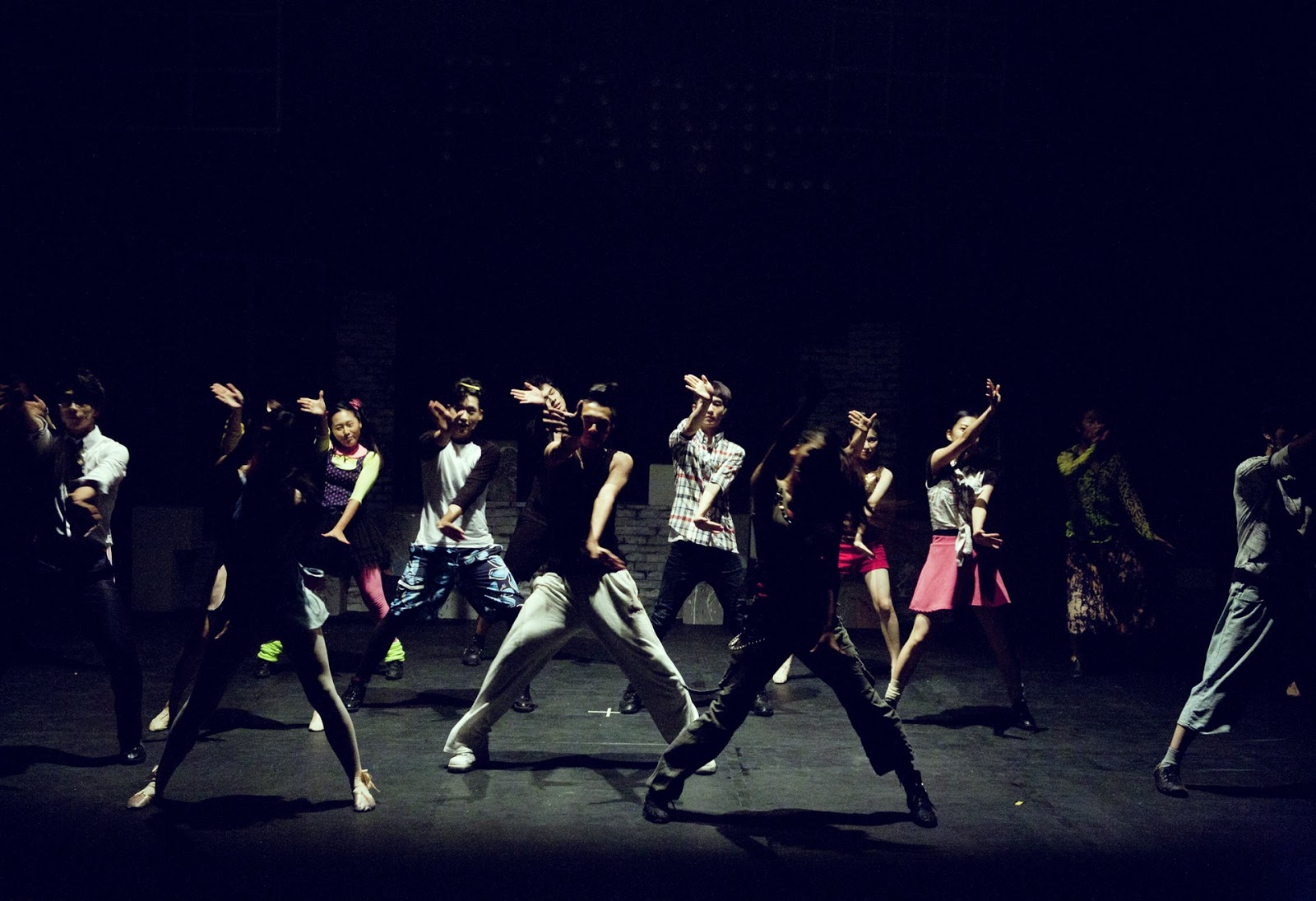
What speakers can learn from comedians about language and rhythm


Comedians are some of the best teachers of language and rhythm. I've written more than 20 posts about comedians and what speakers can learn from them, and I'm constantly inspired by how creative they are with their words and delivery.

I recently came across this fantastic video that breaks down a Louis CK joke into its components and describes exactly how it's set up and what makes it funny. I agree with The Nerdwriter that Louis CK has a unique genius to his jokes, especially in how effortless and conversational they seem, while still incredibly structured.

The narrator mentions "riding a wave of feeling" at one point, and this is exactly what I teach my clients about taking their audiences on an emotional journey. Comedians' primary emotional tool is humor, but they get to humor through activating a host of other emotions: Anticipation, fear, frustration, confusion or empathy are contrasted with exaggeration, incongruous scenarios and surprise twists, leading to a humorous outcome.

Enjoy this short video, and I also suggest making time to watch the HBO special referenced within the video, "Talking Funny." More great discussion from the pros on how successful comedy works. I wrote about it here.


 Click here if unable to view on the blog.

____________________________________________________
On The Everything Page you'll find everything you need to build visibility, credibility and influence through engaging presentations that move your participants into action: freebies, low-cost products and courses, and 1:1 coaching!

You have a platform, but are you making it count?


Whenever a celebrity—whether actor, singer, athlete or other entertainer—takes the opportunity at an awards ceremony or other public event to speak out about a political issue, certain segments of the public immediately begin scolding and lashing out.

"It's inappropriate!" they say. "Celebrities should keep their opinions to themselves!" "We pay you to act and entertain us!"

So let me ask you this: If you had a platform where you could reach hundreds or thousands or millions of people all at once—and you had something really important to say, would you use it?

You don't think of yourself as Meryl Streep at the Golden Globes—and you're not—but I guarantee that many of you are using the platforms you DO have every day.

Are you on Facebook, Instagram, Twitter, Google+ or Tumblr? Do you ever post your opinions about things (anything: food, people, music, politics, organizations, cars, football teams, Mac vs. PC...) on any of these social media channels?

Do you ever regale your friends with your ideas while you're sitting around having a drink? Do you share your ideas on a large or small scale at work, at the place you volunteer, in your committee meetings, at the dinner table? Yeah, you're using your platform.

You think it's different, that Meryl Streep went to the Golden Globes to win an award, so it's not appropriate. But you—you're just doing your thing, hanging out in your "virtual living room" on Facebook or Twitter, and everyone should expect you to say what's on your mind, right?

I just randomly scrolled through my Twitter stream to see what people were saying. Here are some of the opinions I encountered:

"Why do some people use the word feminist as an insult? A feminist is simply someone who believes that women should have equal rights to men."

"We need a lot more love songs."

"Vaccine-pushers calling for even more injections in children is chemical violence against them."

"If you're not pissing off someone you're not doing your job."

"Why Every Entrepreneur Needs to Start #Blogging Immediately"

"Need an influx of cash? Borrow from a friend or family member."

I may or may not agree with these, but the fact remains that these people are using their platforms, in this case Twitter, to share their thoughts, ideas, and beliefs.

See, we do this every day. All day. We share our opinions with the world.

Everything I say on Twitter has a chance of being seen by my 7,840 followers, plus others who don't know me who are scrolling through. Everything I say on Facebook has a chance of being seen by my 1,879 friends, plus their friends, plus others (my posts are public).

Is everything I say momentous? Nope. Is everything I say even worth your taking the time to read? Nope. Nevertheless, it's my opinion and I choose to share it, for various reasons, because I want to. Just like you do.

Your platform may be bigger than mine or smaller than mine. You may be standing in front of audiences, shooting videos, recording Facebook Live streams, leading webinars, facilitating small discussion groups or retreats. And your platform can always be bigger and more widespread, if you want it to be.

You have a platform. Don't kid yourself that you don't. Yours isn't as big as Meryl's, but you use it when you have the chance.

So knowing that you have a platform, that you can grow a platform, and that more people could be hearing what you have to say, how are you going to make the choice to be conscious about your platform?

Are you going to choose to use the platform you have wisely, thoughtfully and in an organized fashion to share your message with those who most need to hear it?

Here's a chance to make that leap from wanting to express your ideas better, more articulately, concisely and powerfully, to actually doing it, and using your platform strategically.

Join me March 20-22 in Santa Barbara, California for my 2 1/2-day retreat "Shake Up Your Speaking: Get Real... Get Results."

Stop fantasizing about having a platform for your ideas. Stop using the platforms you have in a slipshod or haphazard way. Get organized. Get clear. Be compelling.

You may not have millions to share your ideas with, but you do have an audience. Make your ideas stand out. See you in March!

Photo credit: MTSOfan The Woman With the Bull Horn via photopin (license)

____________________________________________________
On The Everything Page you'll find everything you need to build visibility, credibility and influence through engaging presentations that move your participants into action: freebies, low-cost products and courses, and 1:1 coaching!

Julia Child's advice to speakers


“This is my invariable advice to people: Learn how to cook – try new recipes, learn from your mistakes, be fearless, and above all have fun!” ~ Julia Child
Okay, so maybe she wasn't referring to speakers, but who can argue that her advice surpasses cooking and crosses over into many other areas?

As a speaker, if you're willing to try new things, learn from your mistakes, be fearless and have fun, well, you're ahead of the game already.

Happy birthday, Julia Child!

A couple of shots from my visit to Julia Child's kitchen at the Smithsonian! Lots of reflection because it's all behind glass.


____________________________________________________
On The Everything Page you'll find everything you need to build visibility, credibility and influence through engaging presentations that move your participants into action: freebies, low-cost products and courses, and 1:1 coaching!

"Soulless perfection" is the wrong goal


Anyone who watched the final season of American Idol will recall Dalton Rapattoni, the blue-eyed, blond-haired, baby-faced, guy-liner-wearing rocker who took third place in the show's final competition.

Dalton was memorable for his unconventional delivery of surprising song choices, like show tunes "The Phantom of the Opera" and "Hopelessly Devoted to You," which he performed in his own unique style. In fact, the judges came up with a new word for Dalton's take on each week's song: "Daltonized."

Here's the thing about Dalton, and about many of Idol's top contestants over the 15-year run of the show: He was imperfect.

Sure, he's cute, and he's got a great look for the stage. But he didn't have the chops of season 15 top two performers La'Porsha Renae or Trent Harmon. Not even close. And as Simon Cowell used to remind us (frequently), "This is a singing competition."

But no, singing ability was not the top concern of the judges or the millions of fans who voted each week.

Guess what people were voting on (besides the singing): Connection.

Ah yes, there it is again. But what Dalton and others demonstrated was that a performer who doesn't necessarily have the best skills can overcome those limitations with personality and connection.

As Keith Urban said after one of Dalton's performances: "I'd always take an inspired attempt over soulless perfection any day of the week."

What are your limitations as a speaker?

You're not as funny as the next guy? Your stories could use some work? Your knowledge still has some holes? You're still gaining experience and don't come across as polished as some others who've been in the trenches longer?

These things are all fixable. You have plenty of time to grow and improve as a speaker. Keep working, keep reaching, keep blossoming.

And in the meantime, your #1 goal is to be real, to be 100% YOU, and to connect with the audience in your own genuine style, with your own genuine personality.

There's not one speaker, singer, musician, politician or performer who benefits from exhibiting "soulless perfection." And your audience certainly doesn't benefit. Nor will they respond emotionally to your robotic flawlessness.

But an "inspired attempt?" Yes! Let's all seek to be inspired when we perform, and to inspire our audiences to take action in the process, by being true to who we are and fully embracing that person.

P.S. I'm a little sad to realize that this is probably my last ever American Idol-inspired post. AI has been a great inspiration to me over the years, providing numerous examples for connecting speakers with principles of performance. Thanks to all the judges and performers for showing us what works and what doesn't (and what REALLY doesn't) on stage, and how to emotionally engage our audiences.

____________________________________________________
On The Everything Page you'll find everything you need to build visibility, credibility and influence through engaging presentations that move your participants into action: freebies, low-cost products and courses, and 1:1 coaching!

This is how the pros do it: Kelly Clarkson


By now you've seen last week's performance by Kelly Clarkson on American Idol. It was an extremely moving performance, as we would all agree. What I want to talk about today, however, is her professionalism. This is what a pro looks like, whether performer or speaker (and usually, we're both). (If you haven't seen it or want to watch again, it's below.)

Let's get this part out of the way: She knew and we knew that it was going to be an emotional performance for her. She had already mentioned that there were a few reasons she might cry: She's pregnant; she had written this song when she was pregnant with her first child, so there was nostalgia there; and there was additional nostalgia in the fact that she was the first winner on Idol and now she's performing in the final season.

Now let's talk about how she demonstrated professionalism.

1. How did she know she was going to cry? Well, she rehearsed! Do you think Kelly Clarkson ever wings a performance? Absolutely not. She had most certainly rehearsed this performance and had already found it emotional. She was prepared!

2. She created a song and a performance that she knew would connect with the audience in the first place. If you've seen her performances, you know she gives 100% to connecting with the words and with the audience. She never goes through the motions, even when she's performed a song hundreds of times.

3. When she began to be overcome with emotion, she breathed through it. She took her time, but she didn't let it stop her. She remained committed to the performance.

4. On a side note, not about Kelly, pay attention to the band. They are absolutely 100% in tune with her. She pauses, she sings. She breathes, she sings. Talk about professionalism: They stayed with her till the end, never missing a beat or a note. I can't imagine how difficult that must be, but again, this is about rehearsal, preparation and commitment. The band never wavered, even while Kelly was taking unpredictable pauses.

Look back at my recent post on "winging it." You can show up and give a committed and well-prepared presentation, like Kelly Clarkson did, and your audience will be talking about you for days, weeks and even years. Or you can show up and throw away your opportunity to make an impact by not preparing and not caring, and your audience will forget about you minutes later. It's your choice.


____________________________________________________
On The Everything Page you'll find everything you need to build visibility, credibility and influence through engaging presentations that move your participants into action: freebies, low-cost products and courses, and 1:1 coaching!

Stay weird.


Our favorite, and most effective, awards show speeches tend to go one of two directions: Humor or passion.

Both kinds of speeches have the same effect, to trigger an emotional response in the audience.

The response to the humorous speech is laughter, if only a chuckle or an internal giggle. The responses to passionate speeches can vary. Some speeches make us cry, others make us angry. Some make us want to stand up and shout, "Hell yeah!"

Three speeches stood out at last night's Oscars ceremony for their emotional triggers, and prompted all three above-mentioned responses, and more.

We started off with Patricia Arquette, accepting her award for Best Supporting Actress, making an impassioned plea for wage equality. The standing up and fist-pumping was demonstrated by Meryl Streep, and Jennifer Lopez, who was sitting next to her, was equally fired up. Not to mention those of us at home, clapping and cheering!

Then we heard a moving speech by Common and John Legend, right after their powerful musical performance, sharing the award for Best Original Song from the movie Selma.

Common started off, saying "Recently, John and I got to go to Selma and perform 'Glory' on the same bridge that Dr. King and the people of the civil rights movement marched on 50 years ago.

This bridge was once a landmark of a divided nation, but now is a symbol for change. The spirit of this bridge transcends race, gender, religion, sexual orientation, and social status. The spirit of this bridge connects the kid from the South side of Chicago, dreaming of a better life to those in France standing up for their freedom of expression to the people in Hong Kong protesting for democracy.

This bridge was built on hope. Welded with compassion. And elevated by love for all human beings."

Then John Legend stepped to the microphone and continued, "We wrote this song for a film that was based on events that were 50 years ago. But we say Selma is now, because the struggle for justice is right now.

We know that the voting rights, the act that they fought for 50 years ago is being compromised right now in this country today.

We know that right now the struggle for freedom and justice is real. We live in the most incarcerated country in the world. There are more black men under correctional control today than were under slavery in 1850. When people are marching with our song, we want to tell you that we are with you, we see you, we love you, and march on."

If these two speeches weren't enough to fire up all the viewers, Graham Moore finished the job. Accepting the Oscar for Best Adapted Screenplay for the movie The Imitation Game, Moore had this to say:

"Alan Turing never got to stand on a stage like this and look out at all these disconcertingly attractive faces. I do. And that's the most unfair thing I think I've ever heard.

So in this brief time here, what I want to use it to do is to say this: When I was 16 years old, I tried to kill myself, because I felt weird, and I felt different. And I felt like I did not belong.

And now I'm standing here, and I would like for this moment to be for that kid out there who feels like she's weird, or she's different, or she doesn't fit in anywhere. Yes, you do. I promise you do. Stay weird, stay different. And then when it's your turn, and you are standing on this stage, please pass that same message to the next person who comes along."

In an interview after the show, Moore said, "This sort of felt like the thing I always wanted to say and I never thought in my life I'd actually be on a stage and say it."

What's the lesson here? The best speeches have an emotional trigger. The best speeches are those the move the audience in some way, that speak to our humanity and our deepest needs and desires. The best speeches are those that make the audience FEEL something, not always a GOOD something. But something.

You have a choice. You can be the one who gets on stage and plays it safe. Or you can be the one who speaks up and stands out!

View the three speeches below.


____________________________________________________
On The Everything Page you'll find everything you need to build visibility, credibility and influence through engaging presentations that move your participants into action: freebies, low-cost products and courses, and 1:1 coaching!

P.S. It's about the money


In 2012 I wrote a post harshly titled, "I don't care about your dreams." I was making the point that when Project Runway contestants suggested that they should go to Fashion Week because they "... had always dreamed of being a fashion designer," they were way off base. The audience (and Project Runway producers) doesn't care about your dreams. They want to know how you're going to make their life better.

Fast forward to this week's American Idol episode: Hollywood Week.

Singers were asked why they think they should be the next American Idol, and there was plenty of the same "I deserve it because I'm unique," and whatnot. Until Loren Lott took the stage.

Lott: "I'm the next American Idol because I think that I can make American Idol a lot of money."

JLo: "You're speaking the language right now."

See that? Maybe that's not what the audience wants to hear, but it sure is what the American Idol producers want to hear! It's a business, not a dream factory. Loren gets that.

Here's to a contestant who actually gets the point. Give the audience what they want by being an engaging performer. Give the producers what they want by being marketable. And in return, you get what YOU want! (Well, we'll see if she gets what she wants, but at least she has the right attitude!)

Watch Loren Lott's Hollywood Week performance here:


____________________________________________________
On The Everything Page you'll find everything you need to build visibility, credibility and influence through engaging presentations that move your participants into action: freebies, low-cost products and courses, and 1:1 coaching!

Is being emotional a positive in business?


Barbara Corcoran posted the following question on Twitter during last week's Shark Tank episode: "What do you think - is being emotional a positive in business?"

Of course, as a speaker, my immediate answer was "Yes!" Then I pulled up the responses, and they were overwhelmingly negative:

"No!"

"Negative."

"Never."

"Nope."

"Can work both ways. Most of the time, it's not a good thing."

"Was just saying 2 myself crying in business 2 me is such a turn off. No matter how moving."

"I think it's good to be emotionally vested but not a good idea to let your emotions run the show."

"No. emotions can make you look weak and you never want to look weak in business."

Huh...

To be fair, there were a few people who saw the positives of emotion in business:

"Emotional investment is a must, however, know your audience. Know when to pull back & when to show passion."

"I think the old saying is flipped...it should be, 'It's not business, it's just personal.'"

"ABSOLUTELY! Passion breeds hustle!"

"Yes! passion lights the fire to move your business to a whole new level."

"Yes - if you're in control of them."

The reason she asked this question is that one of the entrepreneurs pitching the sharks started to cry when he explained why he was trying to get his business funded. His girlfriend's parents don't approve of him and won't let her leave Japan to be with him. When he becomes "respectable," he hopes her parents will relent.

It was a moving scenario, and I imagine there was just a little bit of nervousness and anxiety underlying this outburst due to standing in front of the five sharks!

But here's what I interpreted from the answers to Barbara's questions: The "good" kind of emotion is called "passion." The "bad" kind of emotion involves crying and leads to being perceived as weak.

I found it an incredibly narrow and shallow view of what constitutes emotion.

Do you want to intrigue your prospect (or your audience)? Do you want them to be curious? Do you want them to feel frustrated with the way things are going and to buy your service or product so they can improve their circumstances? Do you want them to laugh and feel connected to you when you're on stage or when they see your funny commercial? Do you want them to feel superior to others who don't buy your product (there are companies who do)? Do you want to piss them off so much that they take action?

Do any of these emotions I've mentioned above involve crying or weakness? Or even passion?

I also understand that Barbara asked the question very specifically with the words, "being emotional," which has its own connotation, that is, using emotion inappropriately.

But I'm going to argue that using emotion, or "being emotional" (because after all, we're human, and humans are emotional creatures) is a critical tool in business and for speakers.

Emotions are complex, varied, universal (but individually triggered in different ways) and powerfully motivating.

Why would you limit your use of your own emotions to move your audience to take action?

Why would you limit your ability to affect your audience's emotions in a way that makes them feel connected, curious, enthusiastic, greedy, hungry, hopeful or one of a hundred other touchy-feely words that -- by the way -- prompt your audience to engage with you in a way that serves them and brings you more clients, more visibility, more income, or whatever else it is you are trying to achieve?

No, don't get up on stage and bawl your eyes out. And haranguing and yelling at your audience is only going to make them hate you.

But hey, even a heartfelt and spontaneous catch in the throat or slight tearing up is okay with most audiences. And if a show of emotion from a speaker or businessperson is truly not welcome, then you must be speaking to a roomful of cyborgs. That's an article for another day!

____________________________________________________
On The Everything Page you'll find everything you need to build visibility, credibility and influence through engaging presentations that move your participants into action: freebies, low-cost products and courses, and 1:1 coaching!

"You are all rock stars... literally!" Speech lessons from Oscar winners.


Today I want to give a shout out to Robert Lopez and his wife, Kristen Anderson-Lopez, for their fun and engaging Oscar speech last night.

The pair won the Best Song Oscar for "Let it Go," the hit single from the animated film "Frozen."

Here's why this was one of my favorite acceptance speeches.

Teamwork:

Most pairs or groups who take the stage to accept their awards aren't prepared. One person does all the talking and then someone else, if they're lucky, gets to blurt out a few words before the orchestra plays them off.

The Lopezes had their acceptance speech prepared in loosely rhyming structure and recited it together, alternating the names of people they wished to thank. It both saved time and made the speech more entertaining. They had clearly practiced!

Humor:

They started off, "To our fellow nominees, you are all rock stars... literally." (Best Song, remember?)

Most of the humor was in the rhyming of the names, but the Lopezes also threw in a little ditty to the tune of "Happy Birthday:" "Happy Oscars to you. Let's do Frozen 2," directed at Pixar executive John Lasseter.

Their comic timing was perfect, and they knew exactly when to shout out together for extra emphasis ("Mom and Dad!")

Emotion:

At the very end, the couple stopped rhyming, and Kristen said a few heartfelt words to their daughters. It was a touching moment as Kristen's voice broke and she appeared to tear up.

When winners bring a list of names to the stage, I tend to want to tune out. After all, I don't know who any of those people are. I couldn't care less which executives the recipient feels the need to flatter and fawn over.

In this case, however, the Lopezes kept their speech short (under a minute), and incorporated humor, singing, rhyming and sentiment in a way that kept my attention, kept me smiling the whole time, and didn't feel like the gratuitous butt-kissing that so many speeches are.

Here's the speech if you didn't see it:


Watch here if it's not showing up...

What was your favorite speech of the night?


____________________________________________________
On The Everything Page you'll find everything you need to build visibility, credibility and influence through engaging presentations that move your participants into action: freebies, low-cost products and courses, and 1:1 coaching!

Lessons from the Olympics: Turning a mistake into a win


If you watched the opening ceremony of the Winter Olympics, you noticed that there was a snafu with the display of the Olympic rings, when an electronic snowflake that was supposed to expand into the fifth ring never opened.

I've written in the past about elite and Olympic athletes who don't dwell on mistakes, but get up from a fall or crash and keep performing, sometimes going on to achieve even more than expected. Well, clearly, Olympic ceremony designer Konstantin Ernst has the same die-hard spirit.

In the closing ceremony, the rings were formed by a group of dancers wearing glittering costumes. As the rings formed, one group of performers instead stayed in a small, tight circle (to represent the opening night snowflake) for a few hilarious moments, parodying the opening night mishap. But unlike the opening ceremony, the fifth ring finally expanded and joined the rest.

Watch here: https://youtube.com/shorts/Py_hcezSLAA?si=97HWtyRX96F3pffU

By incorporating his mistake and poking fun at what initially was probably somewhat embarrassing, Ernst shows his sense of humor, his flexibility, his willingness to laugh at himself, and his ability to take a mistake and make something even better out of it.

We're all going to make mistakes on stage. For most of us, millions of people around the world won't be watching. But for our audiences who are, demonstrating grace and resilience under pressure, a sense of humor, and the understanding that we're all human will go far to entertain and connect with the audience -- and perhaps give our presentation that extra luster that people will remember long after it's over.


____________________________________________________
On The Everything Page you'll find everything you need to build visibility, credibility and influence through engaging presentations that move your participants into action: freebies, low-cost products and courses, and 1:1 coaching!

A cheerful tune about conquering stage fright


If you haven't seen this yet, take a few minutes and watch how singer-songwriter-graphic designer Joe Kowan learned to manage his stage fright. I hope this inspires you to do that thing you've been dreading: getting on stage! Joe did it and so can you!


If you can't see the video here, view it on TED.com

____________________________________________________
On The Everything Page you'll find everything you need to build visibility, credibility and influence through engaging presentations that move your participants into action: freebies, low-cost products and courses, and 1:1 coaching!

Connecting without words: Lessons from Jason Brown's performance


It's that time again, when the ramp-up to the Olympics is ... rampant. There are national championships galore, in just about every winter sport, and you can start getting your Olympics fix right now, weeks before the games begin.

I'm a figure skating fan, but I missed the U.S. Nationals, which is why I was intrigued when I started seeing Jason Brown's name all over social media. He's a young skater, just a year out of the junior ranks, but he must have done something pretty amazing to warrant so much attention. So I watched.

The announcer gives a little hint right up front at what makes Jason Brown so notable: his ability to connect with the audience. When you watch this performance, I think you'll agree that he's a master of connection. And yes, all while skating, doing impossible jumps, footwork and spins -- and while not speaking a word.


If you can't see the player, click this link to watch on YouTube.

Watch how he times his jumps and gestures for when he's directly in front of the audience. Watch how he makes direct eye contact, even as he's whizzing by them at high speed. Watch the smiles and facial expressions that demonstrate his enjoyment and the fun he's having on the ice. Watch the audience rise to their feet in a standing ovation before the routine is even over. They just couldn't control themselves!

There are figure skaters who clearly take themselves too seriously. They never smile. They never connect with the audience. They seem to be in their own little world, focusing on not making mistakes and on technical elements. And there are speakers who do the same thing.

In this sport, however, competitors are judged not just on their technical proficiency, but also on performance, interpretation and other artistic elements. As are speakers when they stand up in front of an audience. Performance is necessary. Entertainment value is critical. To those of you who think speakers must be serious and somber and pompous and grim in order to be taken seriously, you are missing a huge emotional component. Your score will suffer.

Which is why young Jason Brown, with only a year of senior competition under his belt, came in second to veteran skater Jeremy Abbott and was chosen as only one of two American men to skate at the Sochi Winter Olympics.

How are you finding ways to connect with your audiences... without words?

____________________________________________________
On The Everything Page you'll find everything you need to build visibility, credibility and influence through engaging presentations that move your participants into action: freebies, low-cost products and courses, and 1:1 coaching!

Monday motivation with Heshy!


If you missed this Saturday Night Live Sketch with Nasim Pedrad playing Heshy Farahat, you are missing out on some pretty darn motivational speaking. I'm ready to sign up!


____________________________________________________
On The Everything Page you'll find everything you need to build visibility, credibility and influence through engaging presentations that move your participants into action: freebies, low-cost products and courses, and 1:1 coaching!

Maintaining composure as your top falls off...


Most speakers, no matter how experienced, still have the tiny thought in the back of their head: "What if something goes wrong?" It's part of our preparation to know what we would do if we lost our place, the computer shut down, or a heckler challenged us.

But most of us don't have to worry about wardrobe malfunctions, like this dancer performing with Ricky Martin on Ellen. Look for the one wearing the crop top with spaghetti straps.

Note her calmness and composure as she most certainly realizes her top is slowly coming off, and how she handles herself. She continues giving 100%, even as she feels herself becoming more exposed. She waits as long as she can to leave the stage.

At 1:30, you can see the top start to open in the back.

At 1:45, it's halfway undone (I'm sure she's feeling a breeze at this point and wondering why her top feels loose).

At 2:45, she's holding it in place.

At 2:55, she gracefully exits the stage, still completely in character.

At 3:22, she returns, and seamlessly joins the rest of the dancers for the final pose.

This is what experience and professionalism looks like. No panic, just thinking on your feet and handling the situation in the moment.


Are you an experienced speaker? Do you have all the composure and poise in the world, but get a little lazy with your presentations sometimes, just because you know you can?

Join me on October 10 for my FREE teleclass: "The Top 3 Mistakes Experienced Speakers Make... And What to Do Instead!" and let's reinvigorate your speaking!


____________________________________________________
On The Everything Page you'll find everything you need to build visibility, credibility and influence through engaging presentations that move your participants into action: freebies, low-cost products and courses, and 1:1 coaching!

It's not how many words you use - it's how you use them


Here's an inspiring message for a Friday morning. Four things stood out to me as I watched Ashton Kutcher's speech from the Teen Choice Awards (video's at the bottom of the post):

1) It's short but sweet.

Remember: You do not need a lot of time or a lot of words to get your message across. Kutcher's message is delivered in under five minutes. Was it too short for you? Was there something missing? Did you not have enough time to understand what he was trying to say? Nope. He said what he needed to say concisely, clearly and with no question as to his meaning. And he even recaps his three points at the end!

2) Stories carry the message.

In under five minutes, Kutcher delivers his three points through stories of his own life and lessons he learned when he was still "Chris." Yep, you can still fit stories into a short speech!

3) It's relevant to the audience.

Kutcher knows his audience: teenagers and young adults. What do they care about? What can he talk about that will mean something to them and also convey his points and his message?

When he says "Opportunity looks a lot like hard work," maybe he doesn't get the kind of cheer he does when he starts to talk about what's sexy, but these young people are hearing from a successful actor what he did to achieve success in a highly competitive and dog-eat-dog industry. What young person doesn't want to hear that? (And those jobs sound a lot like jobs these young people have probably had.)

4) It's emotional.

Kutcher's clearly speaking from the heart. He uses humor. He shows his distaste for the marketing of "sexy." He's animated and impassioned. He uses his face, his body, his words and his voice to express authentic emotion. This is how you make an impact on people.

Do you care that his gestures are not polished and rehearsed, or that he spends some time twisting his fingers together? Are you offended that he's pointing his finger at the audience? Were you horrified that he said, "Like" and "You know?" I bet you didn't even notice most of these things (unless you're in the biz, like I am, and it's your job to notice.) Because who really cares when a powerful message is delivered so succinctly and so passionately?

Take a look and share your thoughts in the comments!


Not seeing the video? Click here to go to YouTube.

____________________________________________________
On The Everything Page you'll find everything you need to build visibility, credibility and influence through engaging presentations that move your participants into action: freebies, low-cost products and courses, and 1:1 coaching!

Speakers: dress the part


I don't typically subscribe to generic rules about how to dress as a speaker. It all depends on the audience, the venue, the topic, your personal style, your message and the image you want to convey.

However, within these parameters, dressing appropriately for different audiences and events is not unimportant. How you dress expresses your personality and your style, but it also completes the package that you're offering as a speaker that includes your content, visuals, delivery and audience interaction.

I attended our local French Festival last weekend and, for about a half hour, hubby and I sat in the audience at one of the entertainment stages. On the schedule of events, we saw this description of one of the musical groups, Django Shmango: "A journey back into a Paris nightclub of the 30s."

What an evocative description! Intrigued, we took our seats and sat through a couple of other acts before Django Shmango took the stage.

I was immediately disappointed by their appearance. A group of musicans appeared in jeans, t-shirts and button-downs. No style and absolutely nothing reminiscent of "a Paris nightclub of the 30s."

Their music was a blend of American and Gypsy jazz, and their music held up its end of the bargain. But their image was blah and not fitting with the theme of 30s Parisian club jazz. They might as well have been in a recording studio or playing on the radio. There was nothing to look at.

The French Festival entertainment features many colorful performers, including a group that reenacts the court of Henri III, Can-Can dancers in traditional costumes, tango and Polynesian dancers, a Femmes Fatales drag show, and numerous chanteurs and chanteuses delivering traditional French songs. And most of these performers are in some sort of costume or attire that enhances the performance.

When the female vocalist of Django Shmango performed a solo number, I couldn't help thinking how much more interesting and fun the show would be if she had worn a gown. Or made *any* effort beyond jeans and a t-shirt.

As a speaker, pay attention to how your audience will be dressed and what your organizer prefers, but beyond that, show some style! Show some personality! Dress in a way that will enhance the message of your presentation.

For example, I once met Chellie Campbell at an event, and struck up a brief conversation while we were getting coffee and pastries. I didn't know she was one of the speakers, but I instantly resonated with her fabulous outfit, which was all green and sparkly gold. I later saw her onstage and discovered that her topic was financial stress reduction and the colors of her outfit represented MONEY! I don't know if she still does this, but at the time I thought it was brilliant.

At Ruth Sherman's recent event, she changed clothes halfway through the day to demonstrate how the way we dress can present different "vibes" to the audience, can influence the mood of the event, and can solidify our personal brand. Her first outfit was more formal, but bright, colorful and figure-flattering. Her second outfit was flowy, playful and funky, and she had also replaced her heels with flats. Both looks were equally "Ruth." Both looks were equally appropriate for the event. It was a great demonstration.

Consider going beyond the "conventional wisdom" suit and tie in a safe color scheme or "ladylike" pearl earrings. Let your outfit show the authentic you, express your brand, and also put a nice wrapping on the overall package you're presenting.

____________________________________________________
On The Everything Page you'll find everything you need to build visibility, credibility and influence through engaging presentations that move your participants into action: freebies, low-cost products and courses, and 1:1 coaching!

Related Posts Plugin for WordPress, Blogger...